

In 1970, Peter Green walked away from Fleetwood Mac. He had built the band from nothing into one of the finest blues-rock outfits in Britain — a group whose early records stood alongside the best of Clapton and Beck, whose guitarist played a Les Paul with a reversed pickup that produced a tone so unique it became known simply as « Greeny. » He walked away at the peak of his powers, struggling with mental health, disillusioned with fame and wealth, and never fully returned to the music he had mastered.
The band he left behind spent five years trying to replace what he had been — cycling through guitarists, changing direction, never quite finding the identity that Green’s vision had given them. Then, in 1975, a package deal arrived from California. A young guitarist named Lindsey Buckingham, and a vocalist named Stevie Nicks. The band said yes. And everything changed. This is the story of Lindsey Buckingham’s Fleetwood Mac guitar reinvention — the man who replaced a blues legend with his bare hands and no pick.
He was the opposite of what Fleetwood Mac had been — and that, as it turned out, was exactly what Fleetwood Mac needed to become.
The Shadow of Greeny
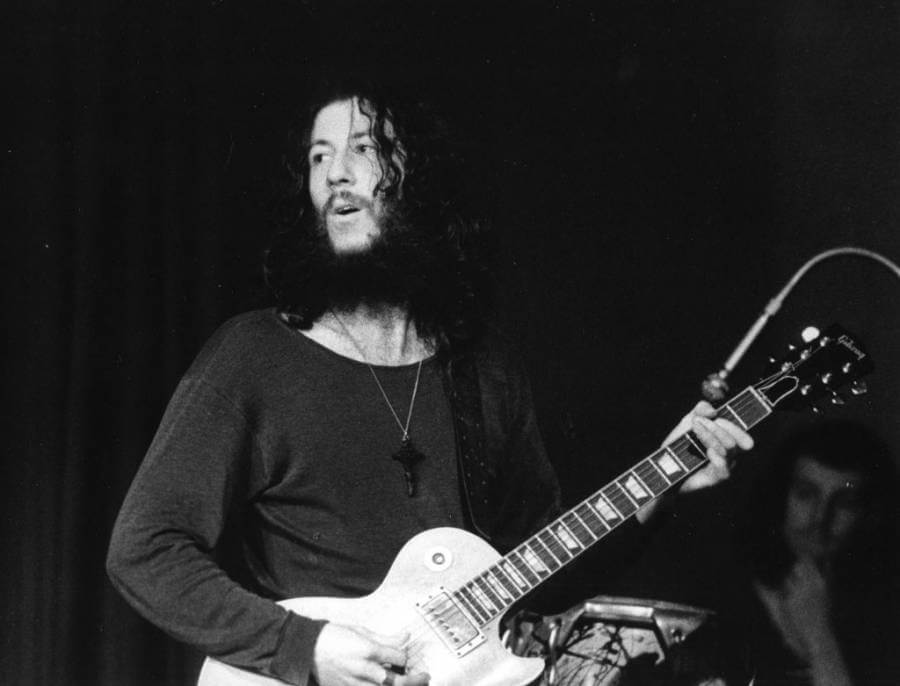
To understand what Buckingham walked into, you need to understand what Peter Green had built.
Peter Green was, in the late 1960s, considered by many — including BB King, who said so publicly — to be among the greatest blues guitarists alive. His tone through his famous 1959 Les Paul « Greeny » — a legendary guitar with a reversed neck pickup that produced a uniquely out-of-phase vocal quality — was immediately recognizable and technically extraordinary. His compositions, including Black Magic Woman, Oh Well, and The Green Manalishi, were not standard British blues covers. They were original, sophisticated, emotionally complex pieces that transcended the genre.
When Green left, Fleetwood Mac lost its identity. The rhythm section of John McVie and Mick Fleetwood remained constant — the spine of the band, the reason it kept existing through the revolving door of guitarists that followed. But the vision was gone.
What they were waiting for was someone who wouldn’t try to be Peter Green. Who would bring something entirely different and make it work on its own terms. Read the full story of the man who created that legacy in our portrait of Peter Green and the birth of Fleetwood Mac.
The Acoustic Man in the Electric Band
When Lindsey Buckingham joined Fleetwood Mac in 1975, he had already established his right-hand approach: fingerpicking on an acoustic guitar, with no pick, using the alternating bass logic of folk and country traditions he had absorbed in California.
The problem was the band’s existing sound. Fleetwood Mac had begun life as a hard-charging blues-rock band under Peter Green — a band built around the crunch of a Les Paul, the weight of heavy electric guitar tones, the physical presence of British blues. Buckingham arrived with a Telecaster, chosen specifically for the clean, clear tone his fingerstyle approach required.
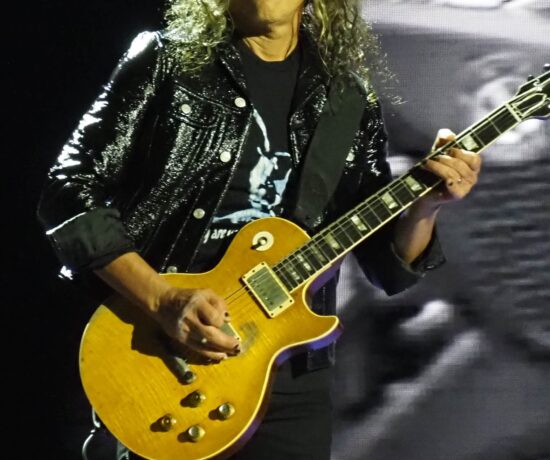
« Before Fleetwood Mac, I was using a Telecaster because it had a really clean tone for my fingerstyle approach, » Buckingham explained. « The band’s pre-existing sound was much fatter, and they felt the Tele really didn’t fit, however, so they asked me to use a Les Paul. »
He was reluctant. The Les Paul’s warmth and sustain were designed for a player who digs in with a pick, who drives the strings with force and rides the sustain. Buckingham’s technique required clarity, articulation, the precise response of a guitar that would let his fingers do their layered, independent work without blurring. He used the Les Paul because they asked him to. And he made it work. But the search for the right instrument continued.
The Turner Solution: Building the Perfect Tool
Two years into his tenure with Fleetwood Mac, Buckingham found his answer — and it came from the same place his technique had come from: California.
Rick Turner was a luthier with a deep understanding of both acoustic and electric guitar design. In 1978, he designed the Turner Model 1 specifically for Buckingham — an instrument that attempted to bridge the gap between the two worlds the guitarist was navigating. Turner described the goal himself: « I wanted to make an electric guitar that would appeal to an acoustic guitarist used to fine old Martins, Larsons, and Gibsons, and yet would be capable of the kind of full bore electric tones. »
The Turner Model 1 has a semi-hollow body, a rotary pickup control that adjusts the magnetic angle for tonal variation, and a resonance characteristic that sits somewhere between an electric and an acoustic. It was built for one player’s specific technique. Buckingham has used it as his primary guitar ever since — owning at least three, each set to a different tuning.
The tunings are a story in themselves.
The Alternate Tuning Universe
Lindsey Buckingham doesn’t tune his guitars the way other rock guitarists tune their guitars.
Each Turner Model 1 he owns is set to a different alternate tuning — optimized for specific songs, specific chord voicings, specific fingerpicking patterns that standard tuning cannot produce. His guitar technician manages a touring setup that includes every Turner Model 1 he owns, plus seven Renaissance acoustics and four Taylor guitars, each in its own tuning, each with a specific strap length calibrated to the difficulty of the material.
This is not eccentricity. It is the logical extension of a technique that grew from acoustic folk music. Drop D for Never Going Back Again — the open bass string resonating through a Travis picking pattern that runs at full tempo for three and a half minutes. Alternate tuning and capo for The Chain — the fingerpicked riff that has become one of the most recognizable guitar passages in pop history. A custom tuning for Big Love — a percussive, multi-voiced acoustic arrangement that sounds impossible until you realize it’s one man, one guitar, no overdubs.
When Buckingham was fired from Fleetwood Mac in 2018, they had to bring in two guitarists to replace him. Two musicians, playing standard electric guitar with picks, to cover the musical ground that one California folk-trained fingerpicker had been covering alone for four decades.
The Impossible Position — and What Came After

« I love that Peter Green stuff, » Buckingham admitted years later. « But it wasn’t me. So it was an odd thing for quite a while, to go up there and be the mouthpiece, be the player, of a group of songs that I had nothing to do with. »
The material that eventually filled the set was Rumours — the 1977 album that sold 40 million copies and remains one of the best-selling records in history. It was followed by Tusk, Mirage, Tango in the Night — a decade of commercial and artistic dominance built on the creative tension between Buckingham’s restless experimentalism and the band’s pop instincts.
Peter Green had built Fleetwood Mac as a blues band of the highest order. Lindsey Buckingham turned them into something entirely different — a pop-rock phenomenon driven by acoustic fingerpicking, alternate tunings, and a right-hand technique that nobody else in the rock world had or has.
Neither accomplishment diminishes the other. They are simply two different visions of what a band could be, separated by five years and the departure of a genius. The shadow of Greeny never fully left. But Buckingham built something in that shadow that stands on its own.
To understand Buckingham’s technique in full detail — the Travis picking roots, the alternate tunings, the aggressive electric snap — read our guide on Lindsey Buckingham’s fingerstyle approach. And for the foundational method that connects Buckingham to every fingerstyle player in this tradition, explore our breakdown of Travis Picking vs. Chicken Picking.
Explore more stories of the legends who shaped rock history in our Blues & Rock Legends section.
Tags: Lindsey Buckingham Fleetwood Mac guitar, Peter Green Fleetwood Mac, Buckingham alternate tunings, Turner Model 1 guitar, fingerpicking rock guitar, Rumours guitar, Blues & Rock Legends

No Comments