
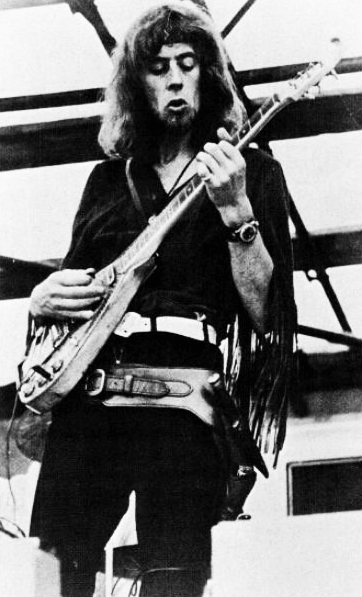
There has never been a band quite like John Mayall’s Bluesbreakers. Not in terms of the music alone — though the music was extraordinary. But in terms of what the band represented as an institution: a continuous, self-renewing mechanism for producing the finest guitarists in British rock, one after another, with a consistency that defied probability and redefined what a blues band could be.
When one guitar genius left, the next one appeared. When Clapton departed for Cream, Peter Green arrived. When Green left to form Fleetwood Mac, Mick Taylor stepped in — and Taylor eventually ended up in the Rolling Stones. The Bluesbreakers were not a band with a fixed identity. They were an ongoing education, run by one man with absolute standards and an infallible eye for talent.
The roster reads like a mythology. In reality, it was a working band that gigged constantly, rehearsed seriously, and produced more significant guitarists than any other single outfit in the history of rock.
The Beano Album: Clapton at the Gate
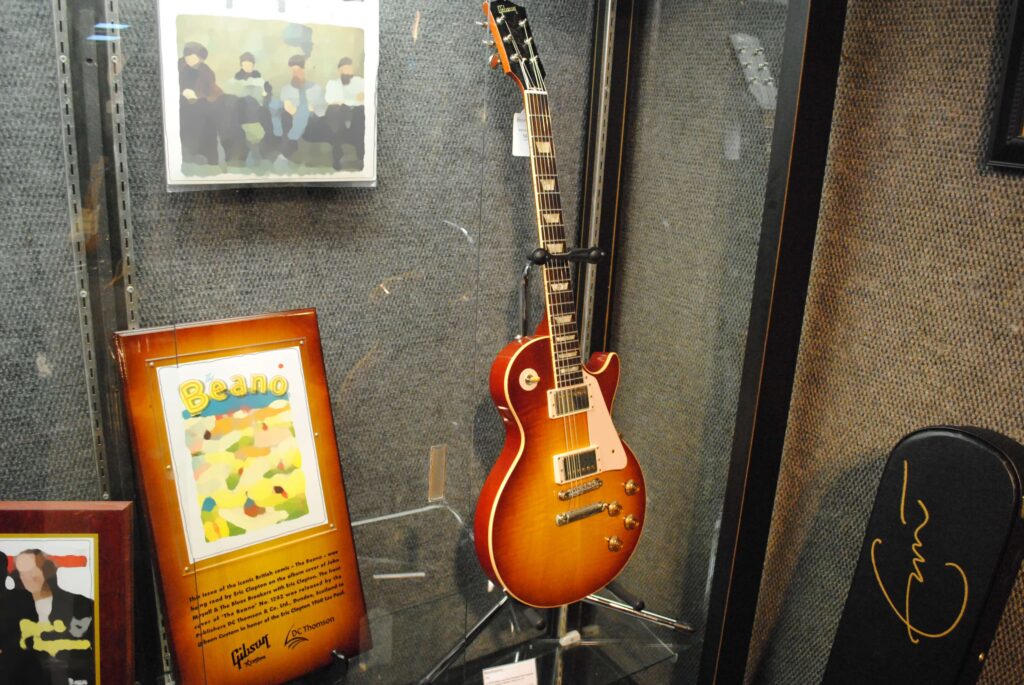
The story of the Bluesbreakers as a guitarist incubator begins properly with Eric Clapton.
Clapton had left the Yardbirds in 1965 because they were going too pop — too commercial, too willing to compromise the blues purity he considered non-negotiable. He found his way to John Mayall, who offered him exactly what he needed: serious blues, demanding standards, and a bandleader who understood what he was capable of.
The recording that resulted — Blues Breakers with Eric Clapton, released in 1966 — is known universally as the Beano Album, named for the British children’s comic that a disinterested Clapton is reading on the cover. What’s on the record is the opposite of disinterested. Clapton’s Les Paul through a Marshall combo, cranked to the edge of breakup, producing the singing, sustaining tone that made Clapton is God appear on London walls.
The guitar technique Clapton developed in the Bluesbreakers — using the bridge pickup for bite, feeding the amplifier until it sang rather than simply amplified, bending strings with the precise vibrato he had absorbed from Freddie King and BB King — became the blueprint for British rock guitar for the next decade. Every significant rock guitarist who came after him in that era learned from what Clapton did on the Beano Album.
Then Clapton left for Cream. The incubator needed its next genius.
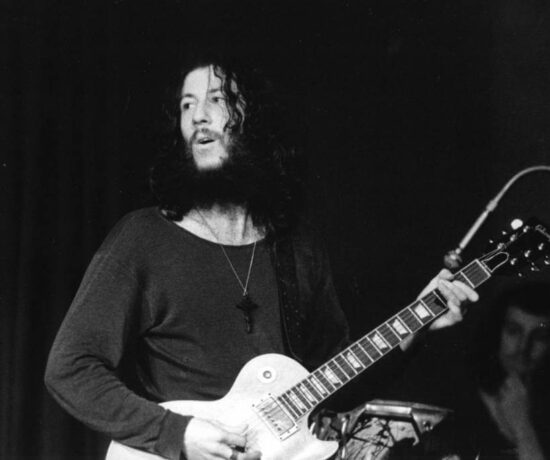
Peter Green: The One Who Made BB King Sweat
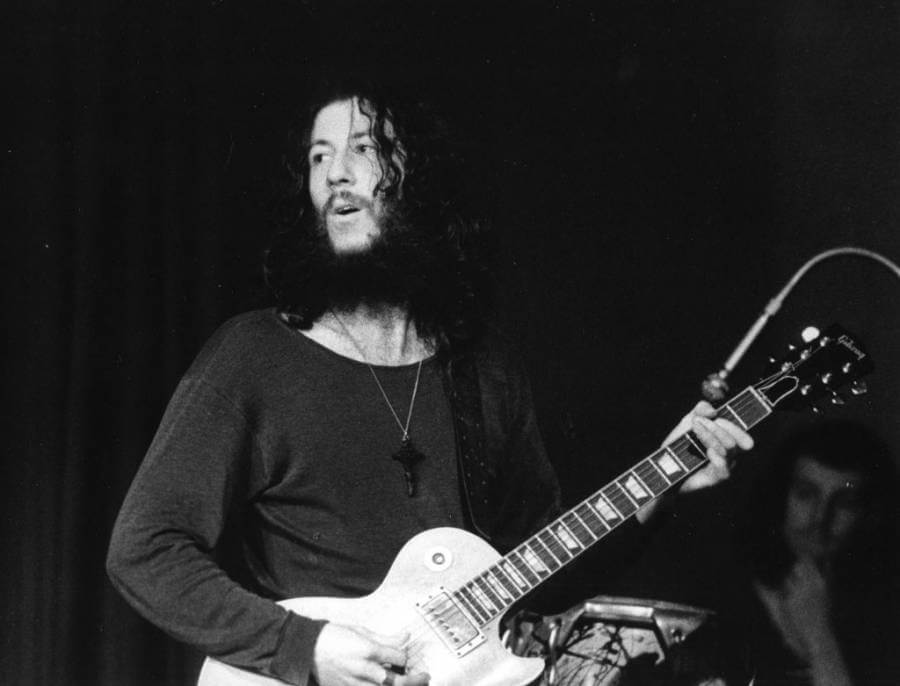
John Mayall’s response to losing Clapton was, in retrospect, almost casual: « Peter Green was the next in line. That was a no-brainer. »
Green arrived with a different sensibility. Where Clapton played with controlled ferocity — powerful, driving, technically brilliant — Green played with an airiness that was harder to categorize and ultimately more emotionally penetrating. His vibrato was wider and slower, his tone thinner and more vocal, his approach to a solo more conversational than declarative. He didn’t replace Clapton. He offered something entirely different, and the audience received it immediately.
The album Green recorded with the Bluesbreakers — A Hard Road (1967) — proved that the band’s quality was not dependent on a single player. Mayall had found another genius. The institution had produced again.
Green’s time in the Bluesbreakers was brief — barely a year — but it was the crucible in which his mature style developed. The Les Paul he was playing during this period was the 1959 Standard he had bought at Selmer’s on Charing Cross Road for £114 — the guitar that would become Greeny, the guitar that BB King would later say made him break out in a cold sweat. Read the full story of that instrument in our article on Greeny: the mythical 1959 Les Paul that made rock history.
When Green left to form Peter Green’s Fleetwood Mac in 1967, the incubator opened its doors again.
Mick Taylor: The Quiet Genius
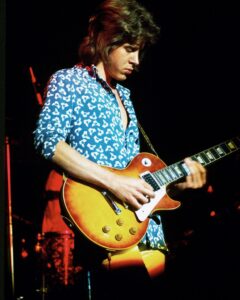
The third great guitarist to pass through the Bluesbreakers was, in some ways, the most purely gifted of all.
Mick Taylor joined in 1967, at the age of seventeen. He was, by any technical measure, extraordinary — a fluid, lyrical player whose ability to sustain long melodic lines over a blues progression revealed a musicality already fully formed at an age when most guitarists are still learning basic scales. His tone was clean and expressive, his sense of phrasing advanced far beyond his years, his ability to serve a song without showboating a quality that Mayall prized above technical flash.
Taylor spent two years in the Bluesbreakers — recording Crusade (1967) and Blues from Laurel Canyon (1968) — before the call came that would define the rest of his career. The Rolling Stones needed a guitarist. Brian Jones was leaving. Would Taylor be interested?
He would. And the Stones, with Taylor in the lineup, made some of the finest music of their career — Sticky Fingers, Exile on Main St., Let It Bleed — records on which Taylor’s fluid lead guitar provided the musical sophistication that balanced Keef’s rhythmic power.
The Bluesbreakers had done it again.
The Incubator Model: Why It Worked
What made the Bluesbreakers function as an incubator rather than simply a band with high turnover was Mayall’s specific approach to leadership.
He was not interested in building a permanent lineup. He was interested in finding the best available guitarist, giving them the framework and the discipline to develop their best work, and then watching them leave — because leaving meant they had outgrown the environment, which was the point.
Mayall ran the band like a demanding teacher who considers a student’s departure the measure of success. When Clapton left for Cream, that was graduation. When Green left for Fleetwood Mac, same. When Taylor left for the Stones, same again. The institution’s purpose was not self-perpetuation but the development of musicians who would then take what they had learned into the wider world.
The bassist John McVie — who would found Fleetwood Mac with Peter Green — spent years in the Bluesbreakers before that moment arrived. The drummer Mick Fleetwood — same band, same journey. Jack Bruce, who would bring his developed bass approach to Cream, had passed through the orbit. The Bluesbreakers were not just a guitarist incubator. They were a music school with a single, obsessive teacher and an open-door policy for anyone serious enough to belong.
Discover the full portrait of the man behind the institution in our article on John Mayall — the Godfather of British Blues. And read how Clapton’s Bluesbreakers training led directly to the explosive power trio he formed next — in our article on Cream: the first supergroup. Explore more stories from the British blues explosion in our Blues & Rock Legends section.
Tags: John Mayall Bluesbreakers, Blues Breakers with Eric Clapton, Beano album, Peter Green Bluesbreakers, Mick Taylor guitar, British blues incubator, Blues & Rock Legends

No Comments