
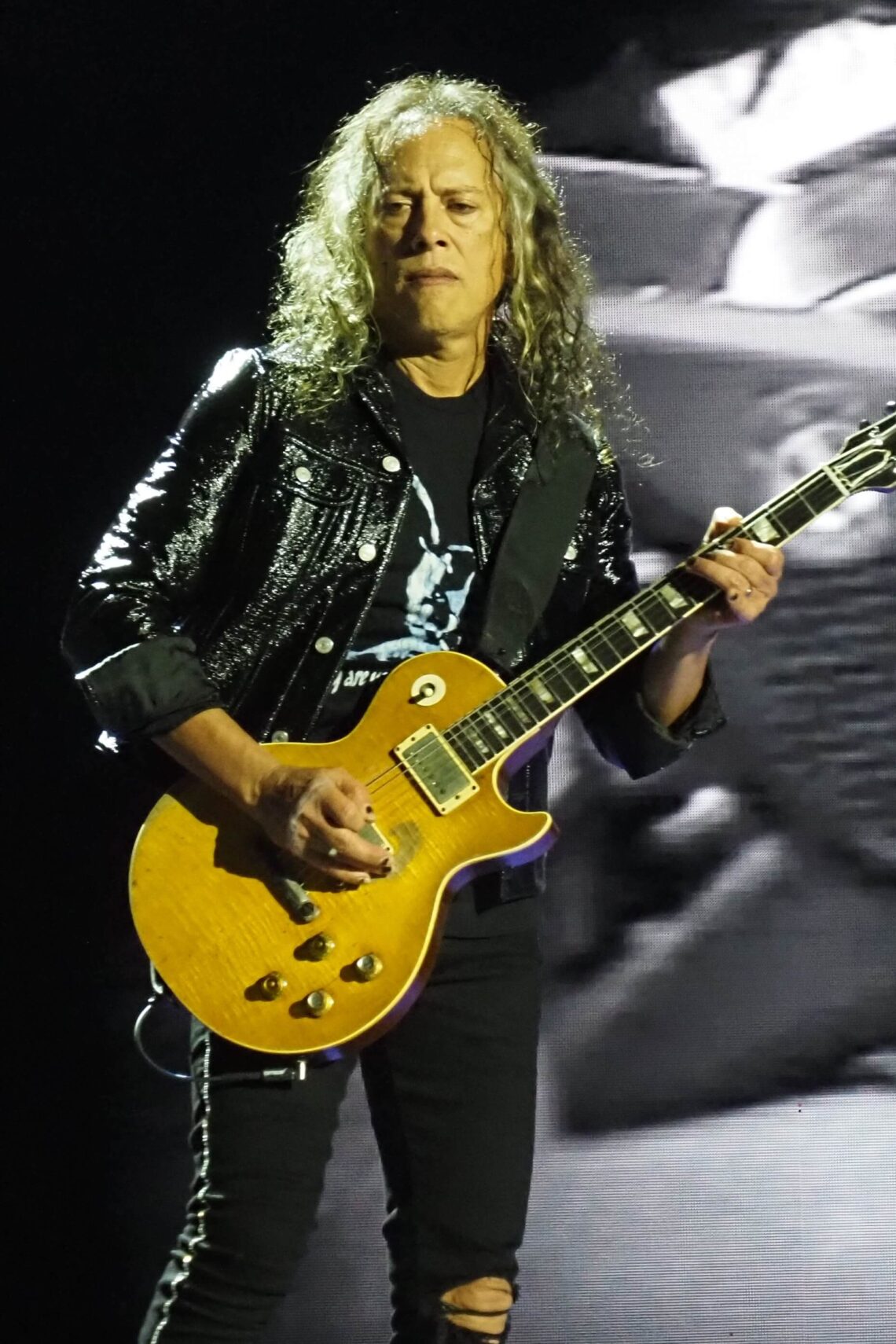
In 1983, a young guitarist from the San Francisco Bay Area showed up at Joe Satriani’s door wanting guitar lessons. He was already playing lead guitar in a band called Exodus. He was about to get a call that would change his life.
Satriani remembers him clearly: « Kirk was a great student. He was very eager to learn. His fingers moved great — and he had great taste in guitar players like Michael Schenker and Uli John Roth. He was completely musical. »
A few months later, the student disappeared. When he came back, he was carrying a copy of Kill ‘Em All. He had joined Metallica. Kirk Hammett’s guitar journey — from eager student in San Francisco to steward of one of the most legendary instruments in rock history — is one of the great stories of humility in the face of achievement.
The San Francisco Kid: Building the Foundation
Kirk Lee Hammett was born on November 18, 1962, in San Francisco, California. He picked up the guitar at fifteen, driven by the energy of hard rock, the technical ambition of the new wave of British heavy metal, and the blues that underlay all of it.
His early influences were not the obvious thrash metal blueprint. He was drawn to Jimi Hendrix, whose ability to make the guitar speak like a human voice represented something beyond technique. He admired Stevie Ray Vaughan, whose intensity and blues authenticity were the real thing. He listened to Gary Moore — the Irish blues player who worshipped Peter Green with the same devotion that Hammett would later bring to Moore himself. And he absorbed the technical sophistication of Michael Schenker and Uli John Roth, whose European heavy metal guitar vocabulary gave him a harmonic ambition that American blues alone couldn’t provide.
Before Metallica, he was the lead guitarist of Exodus — a Bay Area thrash band of genuine quality. He was good enough in Exodus to attract attention. When Metallica called, he made his decision instantly.
The Satriani Education: Learning While Becoming Famous
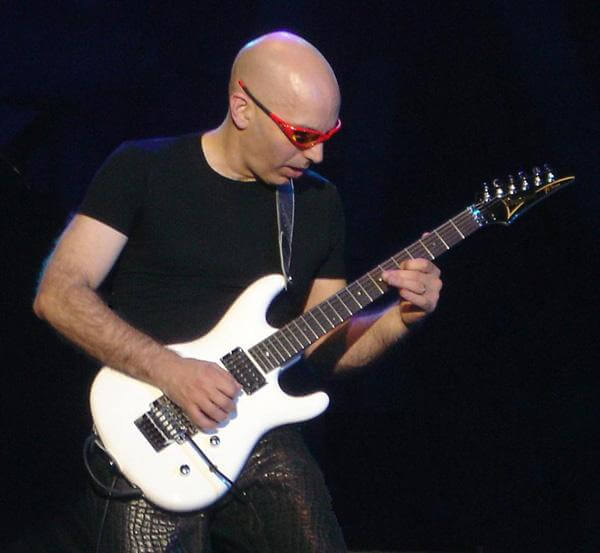
Here is the detail that defines Kirk Hammett’s character as a musician: he started taking lessons from Joe Satriani at roughly the same time he joined Metallica — and he continued taking two lessons per week throughout the recording and touring cycle of the band’s early albums.
Most musicians, having joined the biggest thrash band in the world, would have concluded their formal education. Hammett concluded nothing. He showed up for lessons. He worked.
« Around the time we were writing Ride the Lightning, I was taking guitar lessons from Joe Satriani, » Hammett told Guitar World. « He taught me how to pick the notes I wanted for guitar solos, as opposed to just going for a scale that covered it all.«
The last lesson Satriani gave him came in early 1988 — just before Metallica entered the studio to record …And Justice for All. By that point, Hammett had been in the biggest metal band in the world for five years. He was still taking lessons twice a week. Not only did he study with Satriani, but he also taught himself jazz and blues, and later took classes at the City College of San Francisco after the Black Album tour. The man who had played to hundreds of thousands of people was sitting in a classroom, learning.
The Metallica Sound: Wah, Pentatonics, and the Art of the Solo
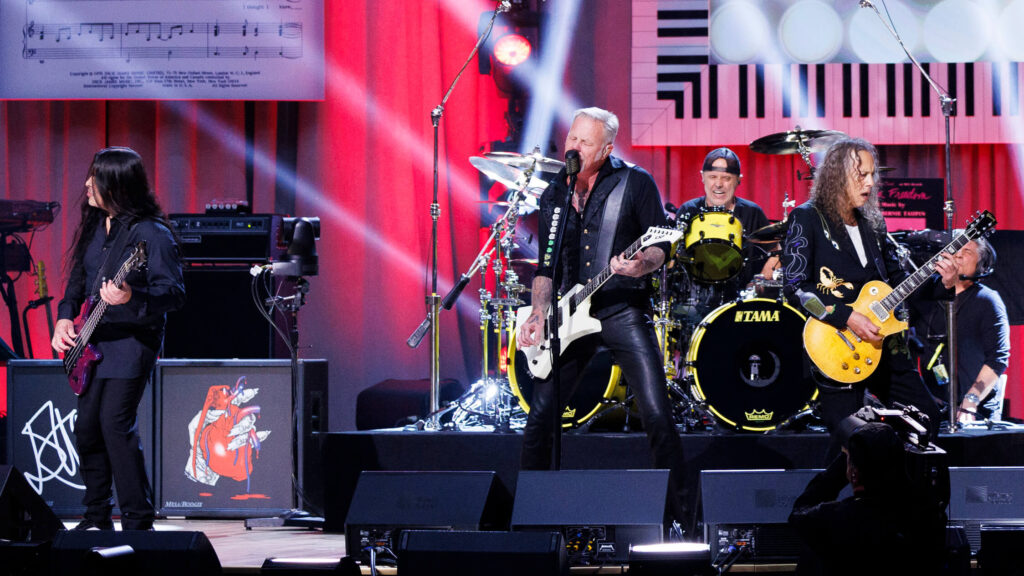
Kirk Hammett’s contribution to Metallica’s sound is the lead guitar vocabulary — the solos that erupt out of James Hetfield’s riff architecture like something breaking the surface of water.
His signature tools are well known: the wah pedal, used more expressively and consistently than almost any rock guitarist of his generation; the pentatonic and blues scales that give even his most technically demanding solos an emotional directness; and the melodic sensibility that Satriani describes as Hammett’s ability to play « on top of the riff » — solos that function as extensions of the song’s emotional content rather than technical displays disconnected from the music around them.
The solo on Nothing Else Matters is the clearest example of Hammett’s melodic instinct at its most direct. No wah. No pyrotechnics. Just a melody that builds slowly, reaches for something, and lands with the quiet authority of a player who knows exactly what the moment requires. It is, by any honest assessment, one of the most emotionally effective guitar solos in the mainstream rock canon.
The solos on Fade to Black, One, Master of Puppets, Orion — each one serves the song rather than interrupting it. Each one sounds inevitable. That is Satriani’s teaching at work: not the scales, but the understanding of how to choose which notes the song actually needs.
The Fan Who Never Forgot Where It Came From
Kirk Hammett is, before everything else, a fan. He is a devoted collector of vintage horror movie memorabilia — posters, props, artifacts from the genre that has been his obsession since childhood — and his collection is exhibited publicly, because he believes that objects should be seen rather than stored. The same instinct applies to his guitars.
When he acquired Peter Green’s legendary 1959 Les Paul Standard — the « Greeny », the guitar with the accidentally reversed neck pickup that produced the out-of-phase tone that made BB King break out in a cold sweat — he was acquiring one of the most significant instruments in rock history at a reported $2 million. He could have put it in a case and kept it safe from the world.
He plays it. Every night, on stage, in front of thousands of people. Joe Bonamassa put it perfectly: « Collecting is about what you love and what you’re gonna do with it. PG’s Les Paul gets played every night. » Read the full history of that extraordinary instrument in our article on Greeny: the mythical 1959 Les Paul that made rock history.
The student who showed up at Satriani’s door in 1983 became the man who plays Peter Green’s guitar to fifty thousand people. That arc — from eager student to steward of a legend — is the Kirk Hammett story in its most complete form.
Explore more legends and their instruments in our Blues & Rock Legends section.
Tags: Kirk Hammett guitar, Kirk Hammett Metallica solo, Metallica lead guitarist, Kirk Hammett influences, Nothing Else Matters solo, Joe Satriani Kirk Hammett, Greeny Les Paul, Blues & Rock Legends


No Comments