
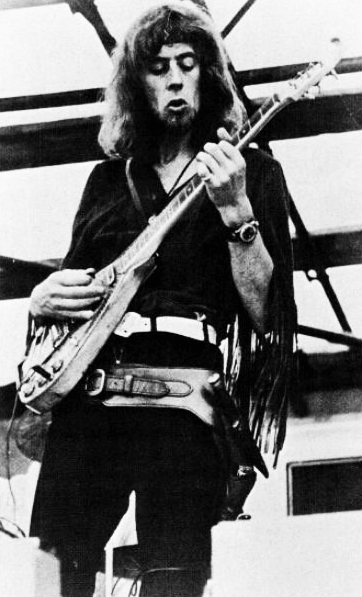
In the mid-1960s, if you were a young British guitarist trying to understand American blues, there was one address you needed to know. John Mayall’s house.
Not because Mayall was the most technically gifted player in London — though he was formidable on guitar, piano, and harmonica simultaneously. Not because he was the most famous. But because Mayall had what nobody else had: the records. Imported American blues albums that had not crossed the Atlantic in any commercial quantity, that existed in England only because someone had specifically sought them out, paid to have them shipped, and listened to them until the grooves wore thin.
Muddy Waters. Otis Rush. Little Walter. John Lee Hooker. Buddy Guy. The full canon of Chicago and Delta blues, sitting in John Mayall’s living room in London, available to any young guitarist serious enough to make the journey. The godfather of British blues had built the most important private music library in England — and he shared it with anyone who showed up at his door with serious intentions.
Clapton made the journey. So did Peter Green. So did Mick Taylor, who would eventually take his education to the Rolling Stones. Mayall’s house was the university. His record collection was the curriculum.
The Man Who Was Already Old When Rock Was Young
John Mayall was born on November 29, 1933, in Macclesfield, Cheshire — a full twelve years before Eric Clapton, and nearly a decade older than most of the musicians he would come to mentor. He was, in the world of the British blues boom, already a grown man when his sidemen were teenagers.
He was inspired by his father’s extensive record collection — a detail that would prove symmetrical, since his own collection would inspire a generation of guitarists who came after him. He became proficient on guitar, piano, and harmonica, spent four years in art school and a stint in the Army during the Korean War, and arrived in London in the early 1960s with a fully formed musical identity and an obsession with American blues that preceded the boom by years.
In 1962, Mayall opened for Alexis Korner’s Blues Incorporated — Korner being the godfather figure of the entire British blues scene, the man who had introduced the music to London before anyone else was paying attention. Korner recognized Mayall’s seriousness and mentored him in turn.
By 1963, Mayall had formed the first lineup of the Bluesbreakers. The revolving door had begun.
The Record Collection That Changed British Music
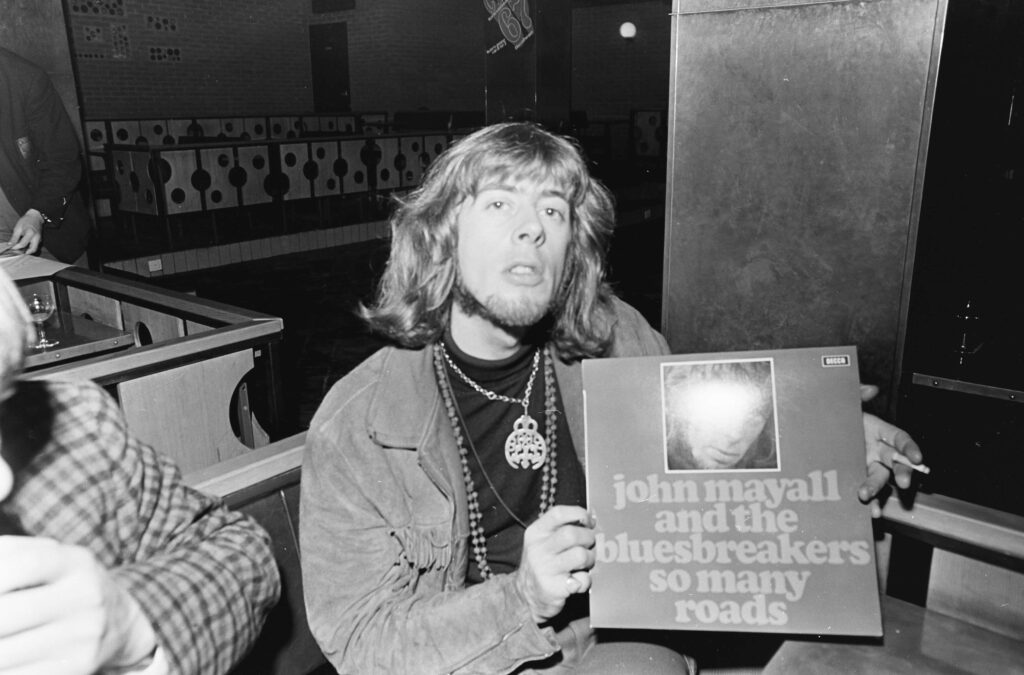
Here is what made Mayall unique in the London blues scene: he was a generation older, and he had used that extra decade to build a record library that was, in the mid-1960s, genuinely irreplaceable.
American blues records arrived in Britain through specialist importers, through sailors who brought them back from US ports, through the occasional musician who had toured America and come back with vinyl. They were not available in ordinary record shops. You had to know where to look, and you had to care enough to look seriously.
Mayall cared with a devotion that bordered on religious. His collection covered the full spectrum of American blues — Chicago electric, Delta acoustic, Texas, Louisiana — the complete geography of a music that most of his contemporaries knew only partially. And he shared it freely, with anyone who showed up at his door with a serious intention.
Clapton has spoken about this directly: the education he received in Mayall’s living room, listening to records he had never heard before, understanding for the first time the full depth of the tradition he was trying to enter. The same education went to Peter Green, who absorbed Otis Rush and BB King through Mayall’s collection before developing the style that made him one of the most original voices in British blues. John Mayall did not just lead a band. He ran a school. And his record collection was the library.
Top of the Hill and the Mayall Standard
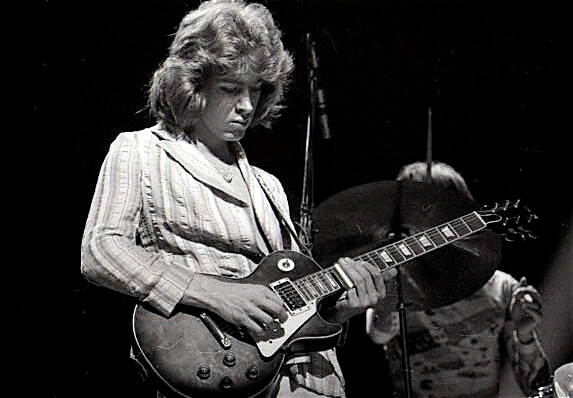
To understand what Mayall demanded of his musicians, listen to Top of the Hill — a track that encapsulates everything his band stood for in its most concentrated form.
The opening guitar work is precise and authoritative — Peter Green’s lead tone establishing the mood before the full band enters. When the rhythm section locks in, what’s striking is the discipline: nothing wasted, every player in service of the song, the blues vocabulary deployed with the fluency of people who had spent years studying the originals rather than approximating them.
Mayall’s genius as a bandleader was not compositional — though he wrote prolifically and well. It was curatorial. He knew what the blues required. He knew which musicians had it and which ones were faking. And he built his bands accordingly, creating an environment where a young Eric Clapton could develop from a promising guitarist into a fully formed master, where Peter Green could find his voice, where Mick Taylor could discover what a Les Paul and a disciplined band could do for a player of his natural gifts.
The musicians who left the Bluesbreakers to form their own bands — Clapton to Cream, Green to Fleetwood Mac, Taylor to the Stones — carried that standard with them.
The Godfather’s Legacy
John Mayall, OBE — the godfather of the British blues — was a generation older than most of his sidemen, a mentor whose bands were both a lab and finishing school for iconic musicians. Eric Clapton, Peter Green, and Mick Taylor served, as did bassists Jack Bruce and John McVie, and drummers Mick Fleetwood and Aynsley Dunbar, among dozens of others. Five of Mayall’s first seven albums placed inside the British Top Ten.
He continued recording and touring into his eighties — still playing, still serious, still the most committed student of American blues that Britain ever produced. He was inducted into the Rock and Roll Hall of Fame, recognition that came late but came unambiguously.
John Mayall died in 2024. The musicians he shaped are still playing, still carrying the education he gave them in a living room in London in the 1960s, still building on the foundation of a record collection that one man assembled because he loved the music more than anyone else around him. Explore more stories from the British blues explosion in our Blues & Rock Legends section.
Want to go deeper into the incubator Mayall built? Read our dedicated article on John Mayall’s Bluesbreakers — the band that birthed Clapton, Green, and Taylor.
Tags: John Mayall, British blues boom, John Mayall Top of the Hill, Eric Clapton John Mayall, godfather of British blues, Bluesbreakers history, Blues & Rock Legends


No Comments