
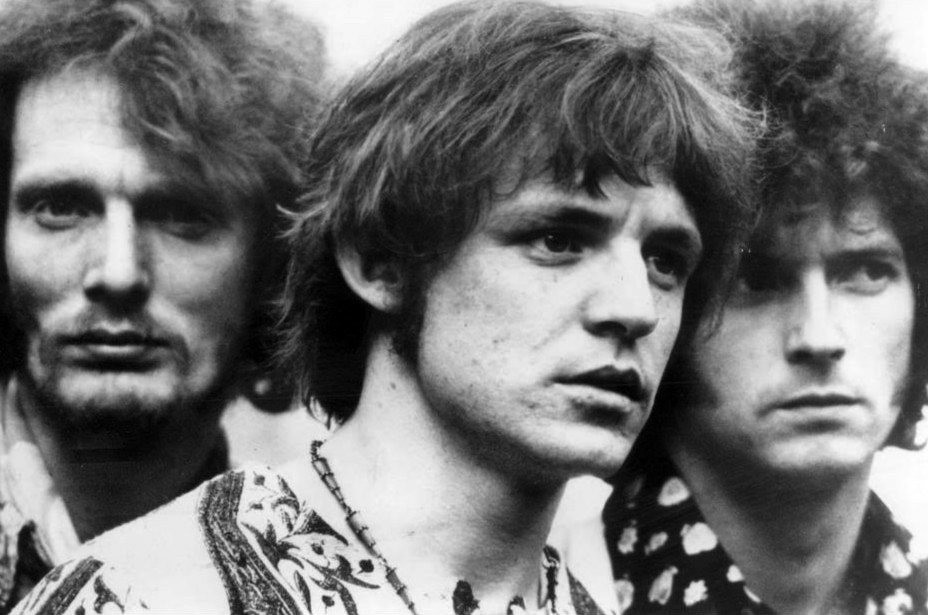
Ginger Baker asked Eric Clapton if he wanted to form a band. Clapton agreed immediately — on one condition: Jack Bruce had to be the bassist. Baker was so surprised he nearly crashed the car.
The problem was that Baker and Bruce hated each other. Not the polite professional friction of two strong personalities in close quarters. Genuine, volcanic, physical hatred — born in the Graham Bond Organisation, where the two had played together and fought constantly, and carrying over into everything that followed. Baker had every reason to say no. He said yes anyway. Because he knew, as Clapton knew, that the combination of the three of them would produce something that had never existed before.
They called themselves Cream — because they considered themselves the cream of London’s musicians. The name was the statement. Cream the band became the world’s first supergroup, the inventors of the power trio, and one of the most explosive two-year runs in rock history.
The Birth of the First Supergroup: Cream of the Crop
The concept of the supergroup — a band formed entirely of musicians already famous from other bands — did not exist before Cream. It was their invention, their contribution to the vocabulary of rock, and it has been imitated endlessly in the half-century since.
Eric Clapton came from the Yardbirds and John Mayall’s Bluesbreakers — already a legend in Britain, the guitarist whose name was appearing on walls across London as an act of collective devotion. Jack Bruce had played with Manfred Mann and the Graham Bond Organisation, a sophisticated jazz-blues ensemble that was the training ground for some of London’s finest players. Ginger Baker had been the drummer in the same organisation — a jazz virtuoso whose technical ability was matched only by his combustible temperament.
Three musicians at the top of their respective games, each with an established reputation, each with a distinct and powerful musical personality. Before deciding on « Cream, » the band had briefly considered calling themselves « Sweet ‘n’ Sour Rock ‘n’ Roll. » They made the right choice.
The concept they brought to life was the Power Trio — three instruments, nothing hidden, nowhere to hide. No rhythm guitarist filling the spaces. No keyboard player smoothing the transitions. Just guitar, bass, and drums, each operating at full capacity simultaneously. Rock critic Dave Marsh described it as « the fastest, loudest, most overpowering blues-based rock ever heard. »
They made their official public debut at the Windsor Jazz and Blues Festival in 1966. The audience reaction was immediate. Something new had arrived.
Three Massive Egos and a Volcanic Chemistry
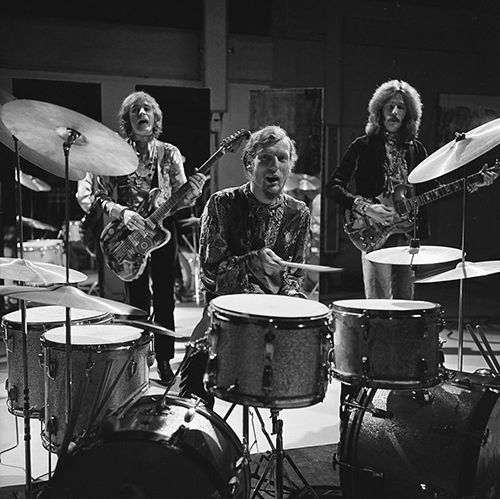
The Baker-Bruce war was not a rumour or a music press exaggeration. It was a continuous, consuming conflict that defined the internal atmosphere of Cream from the first rehearsal to the last concert.
The origins lay in the Graham Bond Organisation, where both had played. Baker believed Bruce’s bass playing was too busy — too melodic, too dominant, too determined to occupy the foreground rather than support the structure. Bruce believed he was right to push the bass forward, to treat it as a lead instrument rather than a time-keeping device. Neither was entirely wrong. Both were absolutely certain they were right. The dispute was musical at its core and personal in its expression, and it escalated over time from artistic disagreement to physical confrontation.
Baker attacked Bruce with a bass drum stand during a performance. Bruce responded in kind on various occasions. The fighting was real.
Clapton sat in the middle of this war and did what he could — primarily to keep playing, to keep the music happening, to use the guitar as a kind of mediating force between two personalities that could not coexist and could not separate. The tension between Bruce and Baker generated energy that found its way into the music — a forward momentum, a constant pressure that pushed every performance to its limits.
Clapton’s amplification expanded accordingly. When Cream started in 1966, Eric and Jack had one Marshall each. Then it became a stack, then a double stack, and finally a triple stack. The volume was a response to the chaos — filling the sonic space, making sure the guitar was audible above the perpetual storm of Baker’s drumming and Bruce’s melodic bass.
Overcoming Shyness: How Clapton Was Forced to Sing
Here is the detail about Cream that most histories underplay: Eric Clapton did not want to sing.
He was, by his own account, profoundly uncomfortable with his voice. The guitar was his instrument, his confidence, his means of expression. Standing at a microphone and singing was an exposure of a different kind — vulnerable in a way that playing was not.
Jack Bruce and Ginger Baker had other ideas. The pressure was partly practical — a three-piece band needed more than one vocalist to sustain a set, and Bruce couldn’t carry everything himself. Baker pushed. Bruce encouraged. Between them, they created conditions in which Clapton had no choice but to step forward.
In time, he took lead vocals on several Cream tracks including Four Until Late, Strange Brew, Crossroads, and Badge — the last of those co-written with George Harrison, which became one of his most beloved recordings. The reluctant singer became a confident one. The Clapton who later performed Wonderful Tonight and Lay Down Sally as a solo artist was shaped in part by two opinionated bandmates who refused to let him hide.
Revolutionizing the Sound: The Disraeli Gears Legacy
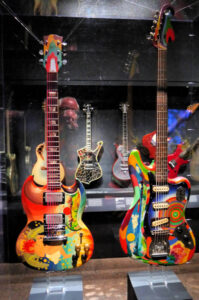
Cream’s second album, Disraeli Gears (1967), is the document that captures them at their most complete — blues foundation, psychedelic ambition, and studio sophistication united in something that had no precedent.
Clapton’s guitar tone on Disraeli Gears introduced what became known as the « Woman Tone » — produced by rolling the tone controls fully off on the neck pickup of his Gibson SG, creating a thick, vocal, almost human quality that made sustained notes sing rather than simply sustain. It reached its fully realized form here, a tone immediately recognizable and endlessly imitated.
Wheels of Fire (1968) became the world’s first certified platinum album. Cream sold 15 million records in a two-year career. Their live concerts became legendary for improvised excursions that sometimes stretched a three-minute song to twenty minutes of collective virtuosity.
They lasted exactly two years. Baker and Bruce’s war, Clapton’s growing disillusionment, the physical exhaustion of constant touring — all of it converged at the end of 1968. The final concerts at the Royal Albert Hall in November of that year were filmed and remain among the most powerful documents of live rock performance ever captured.
The British Blues Roots
For all the psychedelic ambition of Disraeli Gears and the arena-scale grandeur of Wheels of Fire, Cream were at their foundation a blues band — three musicians who had come to rock through the British blues boom, who had spent their formative years absorbing American blues records and trying to understand what made them move the way they did.
Clapton’s discipline had been forged in the years immediately before Cream, in the environment that produced the most concentrated guitarist incubator in rock history — the place where he had learned what a Les Paul through a Marshall could do. Read our full deep dive into John Mayall’s Bluesbreakers — the ultimate guitarist incubator to understand the foundation that made Cream possible.
Explore more stories from the British blues explosion in our Blues & Rock Legends section.
Tags: Cream the band, Eric Clapton Cream, first rock power trio, Jack Bruce Ginger Baker, Disraeli Gears, Woman Tone guitar, supergroup history, Blues & Rock Legends

No Comments