
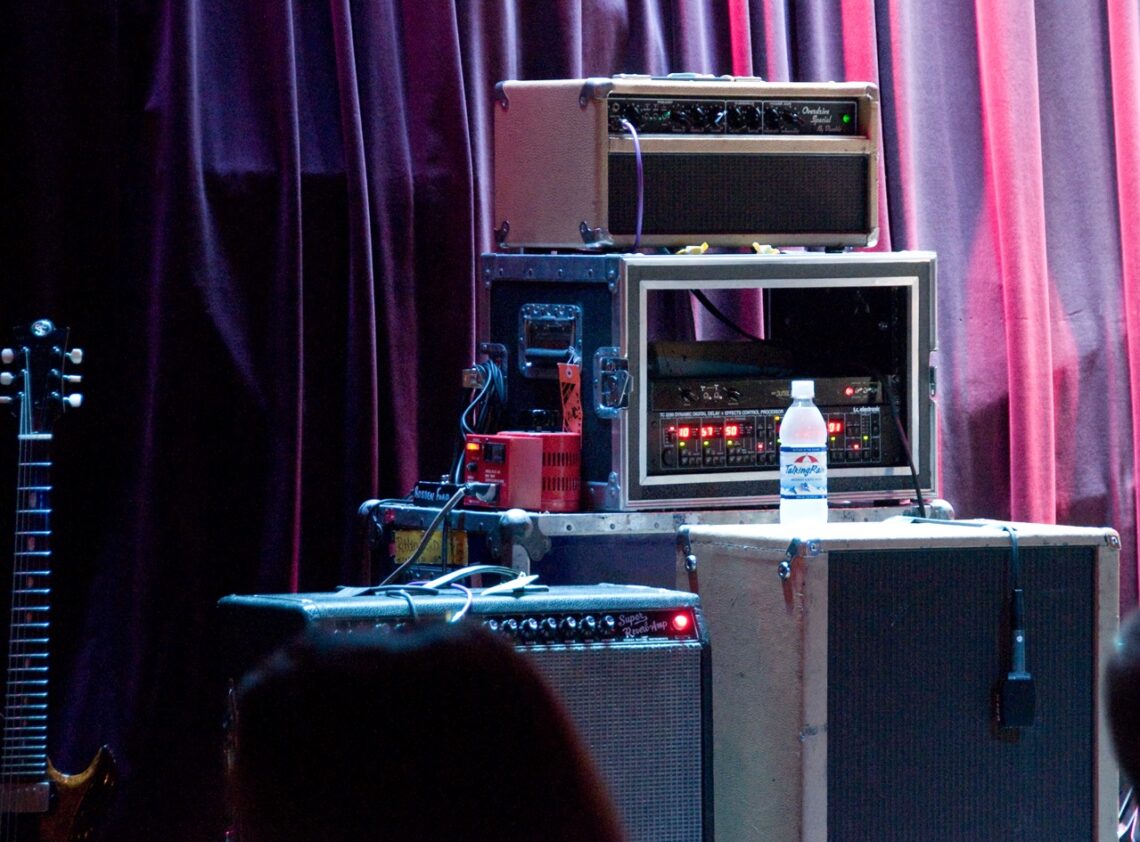
To buy a modern boutique amplifier, you simply need a credit card and an internet connection. But buying a Dumble Overdrive Special — especially back in the 1980s and 90s — required something far more rare than money: it required Alexander Dumble’s personal, psychological approval.
Today, these amplifiers trade in elite circles for the price of a luxury home. While the market value is driven by absolute scarcity, the true legacy lies in the bizarre, uncompromising criteria that the master builder used to select his clients. This is the story behind the most exclusive amplifier ever made — and why you almost certainly can’t buy one.
1. The Mandatory Interview: Why Money Couldn’t Buy a Dumble
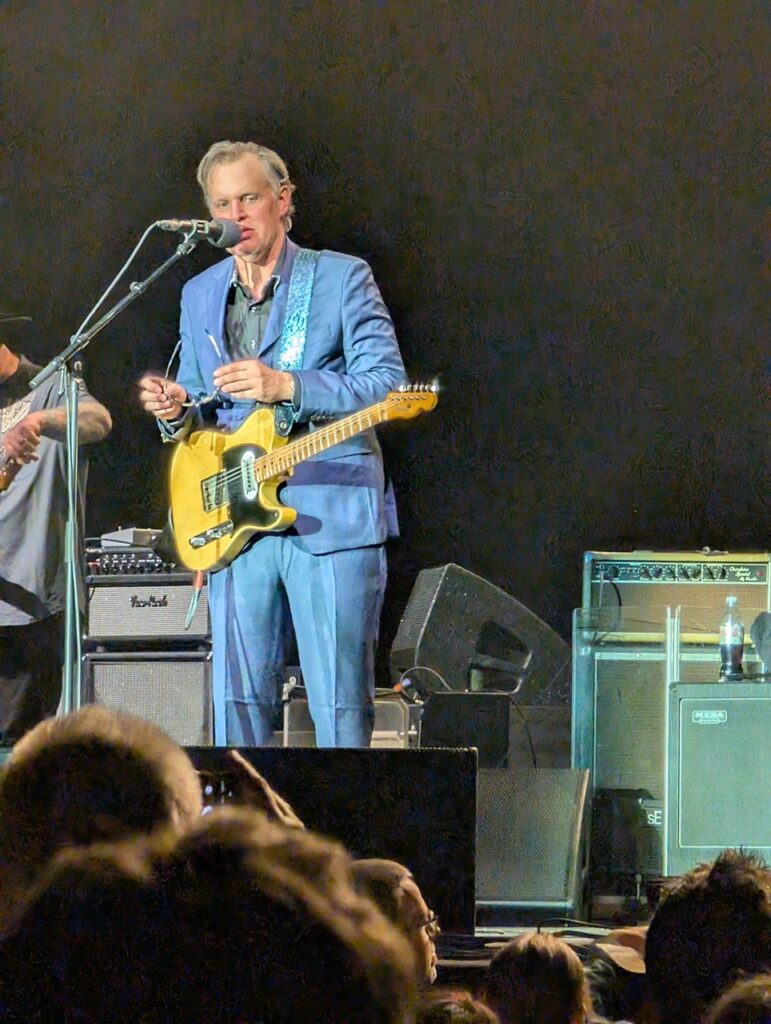
Forget walking into a store. Forget calling a dealer. The first rule of buying a Dumble amp was that you didn’t ask to buy one. You got chosen.
Alexander Dumble worked alone, deep inside his workshop at his castle-like home in Pasadena, California. He was a recluse who rarely left the confines of that space — a world of tubes, transformers, and an obsessive pursuit of the perfect tone. According to Premier Guitar, in order to even get the opportunity to meet with Dumble, a player needed a personal recommendation from someone already inside his trusted circle. Fame meant nothing. Reputation meant nothing. Dumble turned down requests from big-name players without a second thought.
« He treated his amps like they were his children, » recalled guitarist Bruce Forman.
Once a referral was in place, the process moved to what could only be described as an audition. Dumble might invite the musician over for what felt like a casual hang. But make no mistake — he was watching, listening, feeling. He might ask to hear you play. He might ask for a CD. He was not evaluating your technical skill. He was evaluating your soul — whether your musical DNA was worthy of what he was about to build.
« Alexander really only wanted to make amplifiers for the very best players in the world, » said Larry Thomas, former CEO of Fender and Guitar Center, who counted Dumble among his close friends.
This was not a sales process. It was a courtship — and he could walk away at any moment.
2. Tuning the Circuit to Your Emotional Musical DNA
If you made it past the audition, something extraordinary happened. Dumble didn’t build you an amp. He built you your amp.
Every single Dumble amplifier was different. Not slightly different — fundamentally, intentionally different. He hand-matched resistors and capacitors. He listened to how you played, how you attacked the strings, how you bent notes, where your emotion lived in the music. Then he built a circuit that was, in his mind, a direct extension of your musical identity.
Larry Carlton described the feeling of playing through his Overdrive Special as the amp being « an extension of my fingers. » Robben Ford was even more direct: « From the first note, that amplifier was perfect for me. I mean perfect. »
The Overdrive Special — the ODS — was Dumble’s masterwork, and no two were alike. Some had 6L6 power tubes, others EL34s. Some had clean channels that stayed pristine all the way to ten on the dial. Others started breaking up around three. The circuit was constantly evolving, updated through the decades as Dumble’s understanding of tone deepened.
To protect his secrets, he poured epoxy resin « goop » over the circuit boards inside the amp — making the internals impossible to photograph or reverse-engineer. The tone was yours. The blueprint was his.
3. The Infamous Contracts: You Don’t Truly Own a Dumble
Congratulations — you passed the audition. Now came the contracts.
Before Dumble would begin a single solder joint, you were required to sign a series of documents that spelled out, in no uncertain terms, the conditions of ownership. And « ownership » is perhaps too generous a word. According to Rock Cellar Magazine, the terms included:
- Never ask about the progress of your amplifier. Call to check in and he would stop building it immediately.
- If you upset him for any reason, he could keep your deposit and cancel the build entirely.
- You could not visit his shop to watch the amp being built.
- Show up unannounced and face immediate consequences.
- Never open the chassis, photograph the internal layout, or attempt to sell the amplifier without his permission.
The waiting list stretched into years. Multi-year waits were the norm. « You couldn’t rush Alexander, » recalled guitarist Rick Vito.
And if you thought the law protected you — well, it probably did, since these contracts were likely unenforceable. But no one ever tested them in court. Because no one who was lucky enough to own a Dumble wanted to risk losing access to the man who might one day service it, modify it, or bless their next instrument.
The amp was yours. But it would always be, in some fundamental way, his.
4. Who Actually Made the Cut? The Legendary Roster of Owners
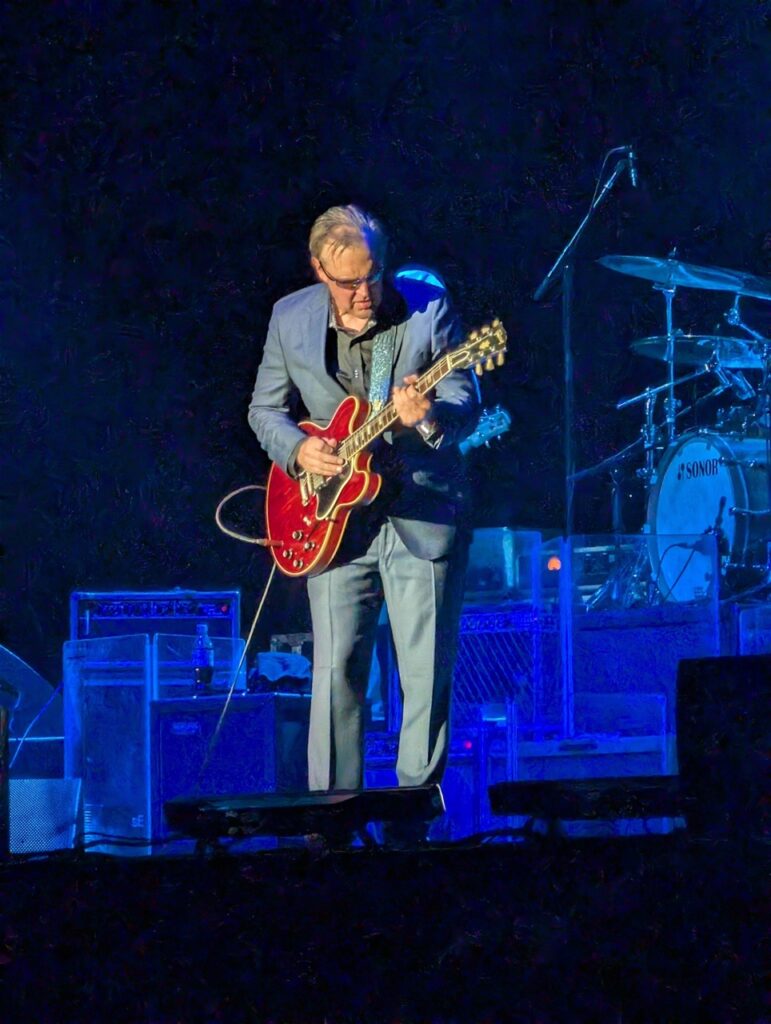
The players who passed through Dumble’s filter read like the Mount Rushmore of electric guitar — and then some.
Stevie Ray Vaughan used Dumble Steel String Singers and a borrowed Dumbleland to record Texas Flood in Jackson Browne’s studio — Browne himself being a trusted Dumble client. Carlos Santana found in his Dumble a direct line to the sustain and expression that defined his voice for decades. Eric Clapton sought out an Overdrive Special for his most soulful lead tones. Robben Ford has been the caretaker of Overdrive Special #002 since 1983, and that specific amp — in his hands — became the definitive benchmark for what a Dumble should sound like.
John Mayer, a devoted student of all things tone, eventually acquired Overdrive Special #009, Steel String Singer #004, and Dumbleland #005 — the very same amp Stevie Ray Vaughan used to cut Texas Flood. Joe Bonamassa currently owns a stash of four Overdrive Specials and calls Dumble « by far the most innovative circuit designer of all time. »
We saw this firsthand at his concert in Luxembourg — read our full review of 2 Hours of Non-Stop Blues Masterclass: Joe Bonamassa Live at Rockhal.
Dumble built approximately 300 amplifiers over his entire career. That’s it. In a world where Fender ships thousands of amps every week, the entire Dumble catalog would barely fill a mid-sized concert hall.
5. From Garage Workshop to the Million-Dollar Auction Block
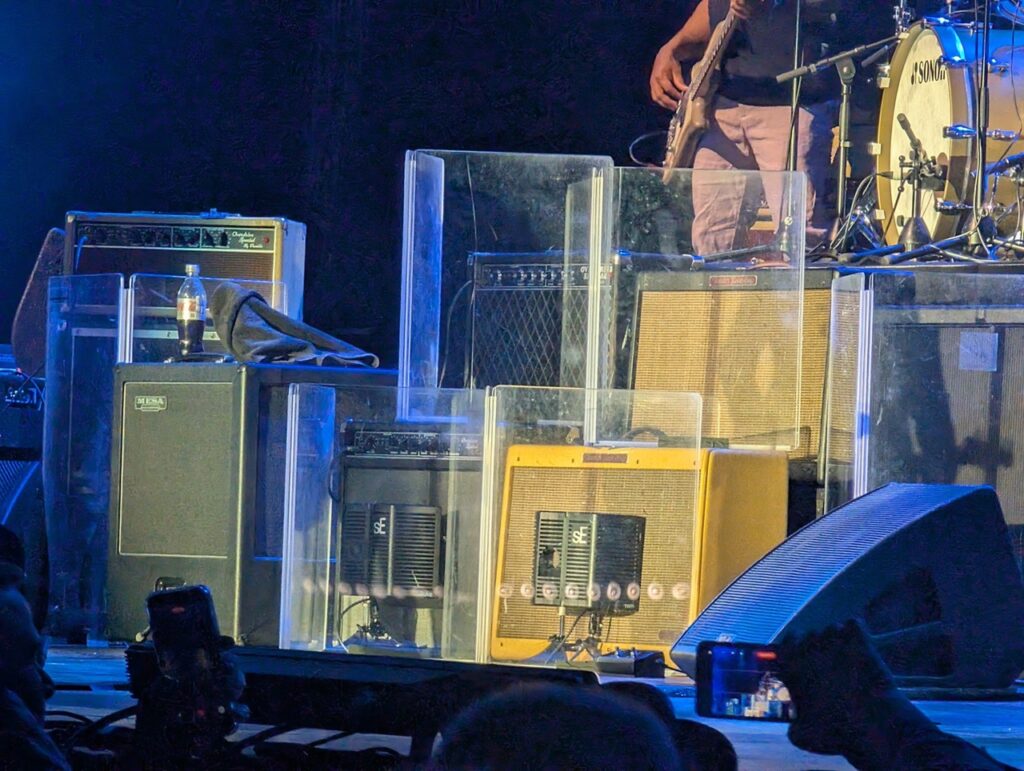
In 1985, a brand-new Dumble Overdrive Special cost $1,925. A Steel String Singer ran $5,000. These were not cheap amplifiers — but they were within reach for a professional musician with a good year behind them.
Today, the math looks radically different.
Dumble amps currently sell on the secondary market for anywhere between $70,000 and $150,000 — with exceptional or historically significant examples fetching even more. The scarcity is absolute: no new production, roughly 300 units total in the world, and most of them locked in the private collections of artists who will never sell.
What drives the price beyond the obvious rarity? It’s the mythology. You are not buying a box of tubes and transformers. You are buying a piece of rock history — a physical artifact of the moment when Carlos Santana, or SRV, or Robben Ford reached for something deeper in their playing and found it, right there in a hand-built circuit from a recluse in Pasadena.
Joe Bonamassa put it best: « Dumble created an entire industry that he didn’t participate in. The boutique amp world — Two Rock, Fuchs, Amplified Nation — exists largely because of what Dumble proved was possible. And yet he never scaled up, never sold out, never compromised. »
He passed away on January 17th 2022, at his home in Turlock, California. The amps he built will outlast all of us.
Curious about the vintage gear that defined the blues legends Dumble served? Explore our Vintage Guitar Hunting journal.
The True Cost of Guitar Royalty
Ultimately, the extraordinary market value of a Dumble isn’t really about vacuum tubes or output transformers. It’s the price of entry into the most exclusive club in the history of electric guitar.
Alexander Dumble didn’t build tools for mass consumption. He created custom extensions of a player’s soul — and he guarded that process with an almost spiritual ferocity. The interviews were rare. The amps were rarer. And the combination of sonic perfection and human eccentricity produced something that no factory, no matter how skilled, has ever been able to replicate.
While most of us will never get past the vetting process — or the astronomical price tag — watching masters like Joe Bonamassa, Robben Ford, or Carlos Santana play through these legendary amps live is proof that the eccentric genius knew exactly what he was doing.
Some things are not for sale. They have to be earned.
For the story of another legendary gear that passed through equally mythical hands, read our deep dive into Greeny: The Mythical 1959 Les Paul That Made Rock History.

No Comments