
There is a sound that defines British rock. Not a specific song, not a specific band — a sound. A chimey, glassy, harmonically rich tone that seems to breathe and respond to every nuance of the player’s touch. A sound that was present on the stages of Hamburg and Liverpool in 1960, at Wembley in 1966, and that continues to define countless recordings today.
That sound comes, in very large part, from a single amplifier: the Vox AC15.
Built in a factory in Dartford, Kent, first introduced in 1958, the AC15 was not designed to become a legend. It was designed to be louder than what was available at the time. What it became instead was something that no designer can fully plan for — an instrument in its own right, with a tonal character so distinctive that generations of players have spent decades trying to understand exactly why it sounds the way it does.
I own one. And every time I plug in, I understand a little more.
The Origins of the Vox AC15: Birth of an Icon (1958)
Dick Denney and the Quest for British Chime
The Vox AC15 was born from a request rather than an inspiration. In 1957, Hank Marvin — lead guitarist of The Shadows — approached Tom Jennings of Vox with a specific need: the band required an amplifier more powerful than the small practice amps available, capable of projecting in live venues without losing clarity or tone.
Tom Jennings handed the engineering challenge to Dick Denney, Vox’s in-house designer. Denney was a self-taught electronics engineer with a deep understanding of vacuum tube behavior — and, crucially, strong opinions about what a guitar amplifier should sound like. He didn’t want to simply build a louder amplifier. He wanted to build a better one.
The result, introduced in 1958, was the AC15 — fifteen watts of Class A power, built around EL84 pentode tubes, with a circuit topology that prioritized harmonic richness over raw power. Denney’s design choices were, at the time, somewhat unconventional. The Class A operating mode meant that the output tubes were always conducting, always working — a less efficient arrangement than the more common Class AB found in American amplifiers, but one that produced a distinctly different tonal character: warmer, more compressed, with a breakup behavior that players described as the amplifier « singing » rather than simply distorting.
The AC15 was not an immediate commercial sensation. But it found its audience quickly — and its audience was exactly the right one.
The Magic of EL84 Tubes and Class A Architecture
The EL84 tube is central to understanding why the Vox AC15 sounds the way it does. Developed by Philips in the early 1950s as a compact, efficient output tube for consumer electronics, the EL84 has a tonal character distinctly different from the 6L6 and EL34 tubes that dominated American and British amplifier design respectively.
Where the 6L6 produces a clean, tight, slightly scooped tone and the EL34 delivers power and aggression, the EL84 sits in a register all its own — bright in the upper midrange, with a compressed, touch-sensitive response and a harmonic character that adds shimmer to clean tones and complexity to driven ones. The breakup of an overdriven EL84 is not the roar of a Marshall or the bark of a Fender Tweed — it is something closer to a musical compression, a blooming warmth that many players describe as the most musical overdrive they have ever heard.
Combined with the Class A circuit topology and Denney’s specific design choices around the tone stack, the AC15 produced a frequency response that emphasized the upper midrange and high frequencies in a way that made single-coil guitars — Stratocasters, Telecasters, Rickenbacker 12-strings — project with extraordinary clarity and presence. The famous « chime » of the Vox sound is not a single design element. It is the product of EL84 tubes, Class A operation, and Denney’s tone circuit working together in a combination that has never been fully replicated.
The Tone of Legends: Who Made the Vox AC15 Famous?
The Shadows: Paving the Way for the Chimey Sound
The Shadows were the first major act to build their identity around the Vox sound, and their influence on British rock guitar cannot be overstated. Hank Marvin’s clean, sustaining lead tone — the tone on Apache, on Wonderful Land, on F.B.I. — was the Vox AC15 and AC30 speaking through a Fender Stratocaster. That combination defined British guitar for a generation of players who heard it on the radio and understood immediately that this was a new sound — something that neither American amplifiers nor previous British designs had produced.
The Shadows were the bridge between American rock and roll and the specifically British approach to electric guitar. And the Vox amplifier was the sonic foundation of that bridge.
The Beatles: Driving the Beatlemania Explosion
The Beatles arrived in Hamburg with limited budgets and significant ambitions. The Vox amplifiers they adopted — initially AC15s, later AC30s as the venues grew larger — were partly a practical choice and partly the result of the same logic that had driven Hank Marvin to approach Tom Jennings: these amplifiers sounded better for what the Beatles were trying to do than any American alternative.
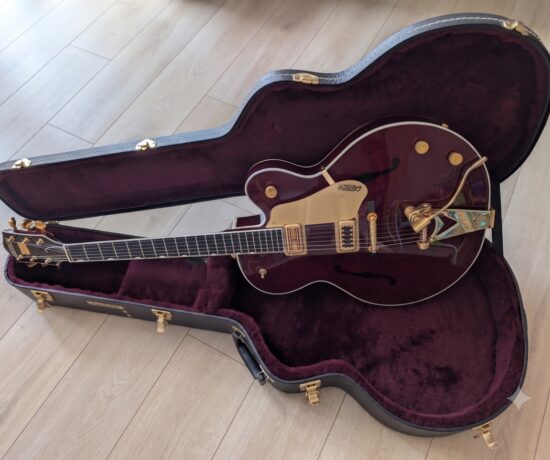
John Lennon’s rhythm guitar through a Vox — his Rickenbacker 325, his Gretsch Country Gentleman, his Casino — had a jangle and a presence that defined the sound of Beatlemania. George Harrison’s lead tone through the same family of amplifiers had a clarity and expressiveness that distinguished him immediately from American contemporaries. The Vox AC15 and AC30 were not simply the amplifiers the Beatles happened to use. They were part of the reason the Beatles sounded the way they did.
The connection between the Beatles and Vox is also personal to me — I play a Rickenbacker 12-string through my AC15, and the combination produces exactly the jangle and chime that Harrison found in those early Hamburg years. Some combinations are simply correct.
Brian May & Rory Gallagher: When Vox Meets the Treble Booster
Brian May built one of the most recognizable guitar tones in rock history using a combination of his homemade Red Special guitar, a Treble Booster pedal, and Vox AC30 amplifiers. The interaction between the Treble Booster — which boosted the upper midrange and high frequencies entering the amplifier — and the Vox’s naturally bright, EL84-driven character created a sound of extraordinary richness and harmonic complexity. The Queen tone is, at its foundation, a Vox amplifier pushed into its natural overdrive by a carefully designed boost circuit.
Rory Gallagher approached the Vox from a blues perspective — his battered 1961 Stratocaster through AC30s produced a tone that sat between Chicago blues and British rock with a naturalness that more powerful amplifiers couldn’t match. Gallagher understood that the AC15 and AC30’s fifteen and thirty watts of Class A power could be driven into a musical saturation at volumes that were actually usable on stage — a practical consideration that continues to make these amplifiers attractive to players today.
Why the Vox AC15 Remains Unbeatable Today
Frequency Response: Piercing Mids and Glassy Highs
The Vox AC15’s frequency response is unlike any American amplifier of the same era. Where Fender amplifiers typically scoop the midrange — producing the clean, hi-fi clarity associated with country and surf — the Vox emphasizes the upper midrange in a way that makes guitars cut through a mix with almost no effort.
This is the practical reason why The Shadows, The Beatles, and Hank Marvin all gravitated toward Vox. In a live setting without modern PA reinforcement, the amplifier that projected most clearly was the one that emphasized the frequencies the human ear is most sensitive to. The AC15 did this naturally, without EQ intervention, as a consequence of its circuit design.
The Top Boost circuit — added to the AC15 and AC30 in the early 1960s at the suggestion of gigging musicians who wanted more treble control — added a second tone control section that allowed players to dial in additional brightness and cut. With Top Boost engaged, the AC15 produces the glassy, shimmering clean tone most associated with the classic Vox sound. Without it, the amplifier has a warmer, more vintage character that works beautifully for blues and roots music.
The Sweet Spot: Ideal Power for Stage and Studio
Fifteen watts of Class A power is a specific and useful number. It is loud enough to be heard in small venues and rehearsal rooms without reinforcement. It is quiet enough to be driven into natural overdrive at volumes that won’t clear the room. And in a recording context, it produces the tonal character of a pushed tube amplifier at levels that microphones can capture cleanly.
The current Vox AC15C1 — the standard production version available today — maintains the essential character of the original circuit while adding modern reliability and a built-in reverb. At around €600-700 new, it represents extraordinary value for an amplifier with this tonal character and this historical pedigree.
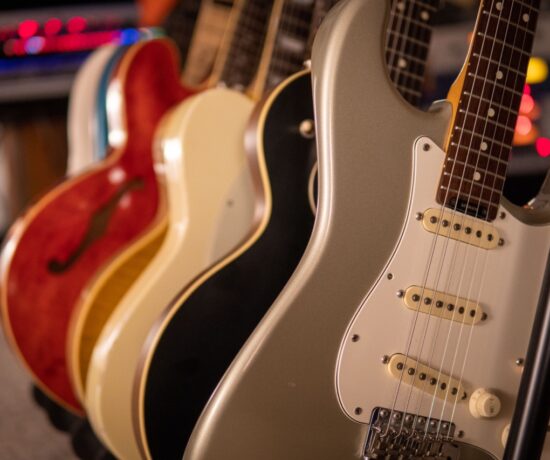
While a humbucker-equipped Gibson brings warmth and grit, pairing a Fender Stratocaster or Telecaster with the Vox AC15 unlocks an unforgettable snap and articulate high-end response that simply doesn’t exist through any other amplifier combination. I play my 1979 Stratocaster through my AC15 regularly, and the combination produces exactly what Hank Marvin found in 1958 — a clarity and chime that no amount of EQ on a different amplifier can replicate.
Vox AC15 vs Vox AC30: Which One Fits Your Rig?
The question every player eventually asks: AC15 or AC30?
The AC30 — thirty watts, two speakers, the amplifier the Beatles switched to as the venues grew — is the louder, fuller sibling. It has more headroom before breakup, a richer stereo-like quality from its two-speaker configuration, and a slightly different character in the way it handles the low end. It is the right choice for larger stages and players who need clean headroom at higher volumes.
The AC15 is the more intimate instrument. It breaks up earlier, which means its natural overdrive character is accessible at lower volumes. For home recording, small venues, and blues players who want to push the amplifier into its natural saturation, the AC15 is frequently the better choice. It is also significantly lighter and more transportable — a practical consideration that matters more than guitarists often admit.
For most players reading this blog — passionate about vintage tone, playing in home studios or small venues, prioritizing feel and response over sheer volume — the AC15 is the answer.
Conclusion: The Timeless Legacy of the Vox AC15
The Vox AC15 has been in continuous production, in various forms, for nearly seventy years. That longevity is not the result of marketing or nostalgia. It is the result of a design that solved a specific problem — how to make a guitar amplifier that responds to touch, that produces harmonically rich tones at usable volumes, that makes single-coil guitars project with clarity and presence — in a way that has never been fully superseded.
Dick Denney’s original circuit, built around EL84 tubes and Class A architecture, remains the reference point for a specific kind of tonal beauty that players continue to seek out. Whether through a 1960 original, a 1980s reissue, or the current C1 production model, the essential character is unchanged: chime, touch sensitivity, harmonic richness, and a breakup behavior that sounds like music.
The Beatles knew it in Hamburg. Hank Marvin knew it in Dartford. Brian May knew it in his bedroom studio. And every player who has ever plugged into a Vox AC15 and felt the amplifier respond to their touch knows it too. Some things are simply right.
While a humbucker-equipped Gibson brings warmth and grit, pairing a Fender Stratocaster with the Vox AC15 unlocks a snap and clarity that defines the British sound. For more gear deep-dives and vintage instrument analysis, explore our Tone & Gear section. And if the story of the guitars that ran through these legendary amplifiers interests you, read our article on The Gretsch Country Gentleman Single Cut: A Purist’s Vintage Dream.
Tags: Vox AC15, Vox AC15 sound, Vox AC15 Beatles, vintage tube amp, British Invasion tone, EL84 amp, Vox AC15 Top Boost, Dick Denney, Tone & Gear

No Comments